Getting your first loan can feel confusing, especially if you are young and haven’t built much credit yet. Whether you need money for a car, education, housing, an emergency expense, or another major purchase, lenders usually look at several factors before deciding whether to approve your application.
The good news is that being young does not automatically mean you cannot qualify for a loan. The bigger challenge is often having a limited credit history, inconsistent income, or little experience managing debt.
I learned that one of the biggest mistakes young borrowers can make is focusing only on whether they can get approved. The more important question is whether the loan is affordable and whether the total cost makes sense.
Here is what young borrowers should know before applying.
What Are Loans for Young People?
Loans for young people are not necessarily a special type of loan. In most cases, they are regular personal, auto, student, or other consumer loans that younger borrowers may use.
The difference is that young applicants often have a shorter credit history and fewer established financial accounts.
For example, someone who recently started working may have a steady paycheck but only a short credit history. Another person may have good credit but limited income because they are still in college.
Lenders generally consider factors such as credit history, income, existing debt, and the ability to repay the loan.
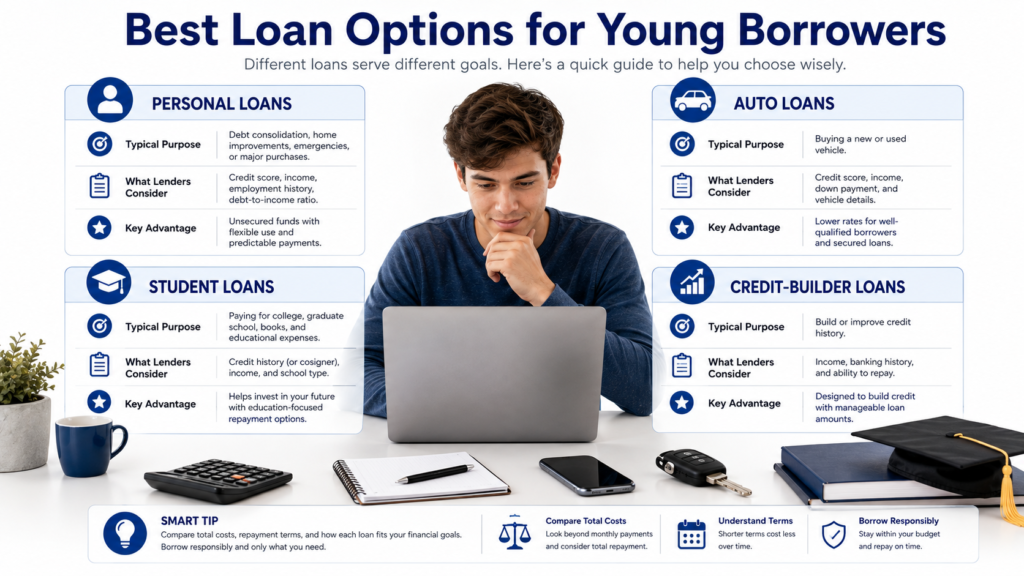
The right loan depends on why you need the money. There is no single “best loan” for everyone.
Personal Loans
Personal loans can be used for various purposes, depending on the lender’s terms. A borrower might use one for an unexpected expense, moving costs, a large purchase, or another legitimate financial need.
Personal loans are typically installment loans, meaning you borrow a specific amount and repay it through scheduled payments.
Before accepting one, compare the annual percentage rate (APR), fees, repayment period, and total amount you will repay.
A lower monthly payment is not necessarily a better deal if it comes from a much longer repayment period.
Auto Loans
If you are buying your first car, an auto loan may be one of the first major loans you encounter.
Auto lenders typically consider credit history, income, down payment, and other factors. If you have limited credit, you may receive a higher interest rate than someone with an established credit profile.
This is why it can be useful to get quotes from multiple lenders before visiting a dealership. You can compare financing options instead of automatically accepting the dealer’s first offer.
The Consumer Financial Protection Bureau recommends comparing loan offers and looking at the overall cost of auto financing rather than focusing only on the monthly payment.
Student Loans
Students may use federal or private student loans to help pay for eligible education expenses.
Federal student loans generally provide protections and repayment options that can differ from private student loans. If you qualify for federal aid, it is worth understanding those options before considering private borrowing.
Students should also calculate how much they actually need to borrow. Taking the maximum amount available simply because it is offered can create unnecessary debt after graduation.
Credit-Builder Loans
A credit-builder loan is designed primarily to help establish or improve a credit history.
Instead of receiving the borrowed money upfront like a traditional personal loan, the lender typically places the funds into an account while you make payments. Once the loan is completed, the funds are released according to the lender’s terms.
For someone with little or no credit history, this type of product can sometimes be useful, but you should compare fees and confirm that the lender reports payment activity to the major credit bureaus.
What Do You Need to Qualify?
Requirements vary by lender and loan type, but young borrowers should generally expect to provide information about their identity, income, employment, and finances.
Common requirements can include:
- Government-issued identification
- Social Security number
- Proof of income
- Employment information
- Bank account information
- Current address
- Credit history
- Information about existing debts
Some lenders may have minimum income or credit-score requirements.
If you are applying for your first loan, don’t assume that a lender will approve you simply because you have a job. Lenders generally evaluate your overall ability to repay the debt.
Can You Get a Loan With No Credit History?
Yes, it is possible, but having no established credit can make borrowing more difficult or expensive.
A lender may have less information to evaluate because you have not demonstrated how you have handled credit in the past.
Depending on the loan, you may need a co-signer, larger down payment, or other form of support. Some lenders also offer products designed for borrowers with limited credit histories.
However, don’t accept an extremely expensive loan simply because it is the first offer you receive.
If you’re denied, find out why. Sometimes the problem is not your age but your income, debt-to-income ratio, credit history, or application information.
Should Young Borrowers Use a Co-Signer?
A co-signer with stronger credit may improve your chances of qualifying or help you receive better loan terms.
But co-signing is a serious financial commitment.
If you fail to make payments, the co-signer may be responsible for the debt. Late or missed payments can also affect both borrowers’ credit histories.
For that reason, I would treat a co-signed loan as a shared financial responsibility rather than simply a way to get approved.
Before involving a parent, relative, or friend, make sure everyone understands the payment amount, interest rate, repayment period, and consequences of missed payments.
How to Compare Loans
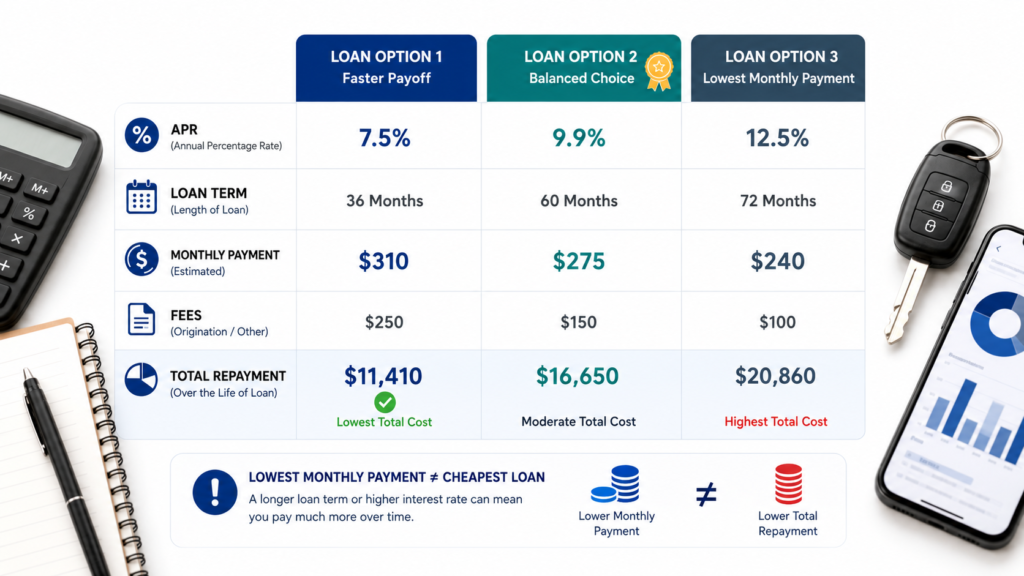
When comparing loans, don’t stop at the monthly payment.
I would look at at least these five things:
APR: This gives you a better idea of the cost of borrowing than the interest rate alone because it can include certain fees.
Loan term: A longer term can reduce the monthly payment but may increase the total interest paid.
Origination or other fees: Some personal loans include fees that can increase borrowing costs.
Total repayment amount: This is one of the easiest ways to understand what the loan will actually cost you.
Prepayment terms: Check whether you can pay the loan early without an additional charge.
The CFPB recommends considering the total cost of borrowing and comparing offers before choosing a loan.
Improve Your Chances Before Applying
If you don’t need the loan immediately, spending some time preparing can improve your financial position.
Start by checking your credit reports for errors. You can obtain free credit reports through the federally authorized AnnualCreditReport.com website.
Next, make sure your existing bills are being paid on time. Payment history can be an important part of your credit profile.
You can also reduce unnecessary debt and avoid applying for multiple loans without a plan. Each lender may evaluate applications differently, and multiple applications can make your financial situation harder to manage.
If your income is new or irregular, keeping documentation of your earnings can also help when a lender asks for proof of income.
Don’t Borrow More Than You Need
This is probably the most important advice I would give a young borrower.
If you qualify for a $15,000 loan, that doesn’t mean you should borrow $15,000.
Before applying, calculate how much you actually need and what monthly payment you can comfortably afford.
Remember that the loan payment isn’t your only financial responsibility. If you’re buying a car, for example, you also have insurance, fuel, maintenance, registration, and repairs.
A loan should fit into your budget rather than forcing your entire budget to revolve around the loan.
Watch Out for Predatory Loan Offers
Young borrowers with limited credit can be attractive targets for expensive lending products.
Be cautious when a lender promises guaranteed approval, pressures you to sign immediately, asks for unusual upfront payments, or refuses to clearly explain the APR and fees.
The Federal Trade Commission warns consumers about scams involving guaranteed loans and advance-fee requests. A legitimate lender should provide clear information about the cost and terms of borrowing.
Never share sensitive financial information with an unknown lender simply because an advertisement promises easy approval.
Getting your first loan is an important financial step. The goal shouldn’t simply be to find a lender willing to approve your application.
The better goal is to find financing that you can comfortably repay and that doesn’t cost more than necessary.
For young borrowers, building a strong financial foundation can be more valuable than getting the biggest loan available. Compare APRs, understand fees, check the repayment term, maintain an emergency cushion, and borrow only what you genuinely need.
If you have limited or no credit history, take your time. Improving your credit profile and comparing several legitimate loan options can potentially put you in a much better position than accepting the first offer you receive.
A loan can help you reach an important goal, but it should be a tool—not something that controls your finances for years to come.