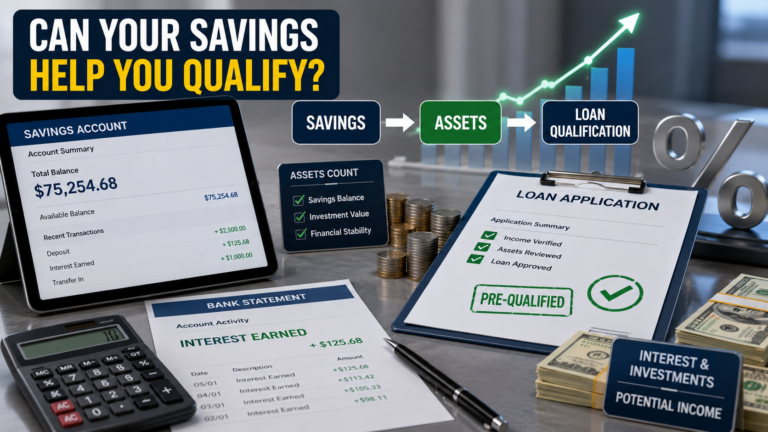
Buying a home without a traditional job can sound almost impossible. Most people assume a mortgage lender will immediately reject an applicant who doesn’t have a regular paycheck.
The reality is a little more complicated.
In the U.S., mortgage lenders generally need to determine that you have the ability to repay the loan. That doesn’t necessarily mean you must have a conventional full-time job. Depending on the lender and your circumstances, qualifying income or assets can come from sources other than a standard paycheck. Federal mortgage rules allow lenders to consider current or reasonably expected income from sources such as self-employment, rental income, investment income, retirement benefits, and certain other sources, as well as qualifying assets.
So, if you’re currently unemployed, retired, self-employed, between jobs, or living primarily from investments, the question isn’t simply “Do I have a job?”
The more important question is “Can I document enough reliable income or assets to show that I can afford the mortgage?”
Can You Get a Mortgage Without a Traditional Job?
Yes, potentially—but getting approved without employment income can be considerably more difficult.
Mortgage lenders generally review your income, assets, debts, credit history, monthly expenses, and other financial information when determining whether you can repay the loan. The CFPB’s ability-to-repay rules require most lenders to make a reasonable, good-faith determination that a borrower can repay a mortgage.
That means having no employer isn’t automatically the same thing as having no qualifying income.
For example, someone who recently left a salaried job but has substantial investment income may have a different application profile from someone who has no employment and no other reliable financial resources.
The documentation is what matters.
Income Sources That May Help You Qualify
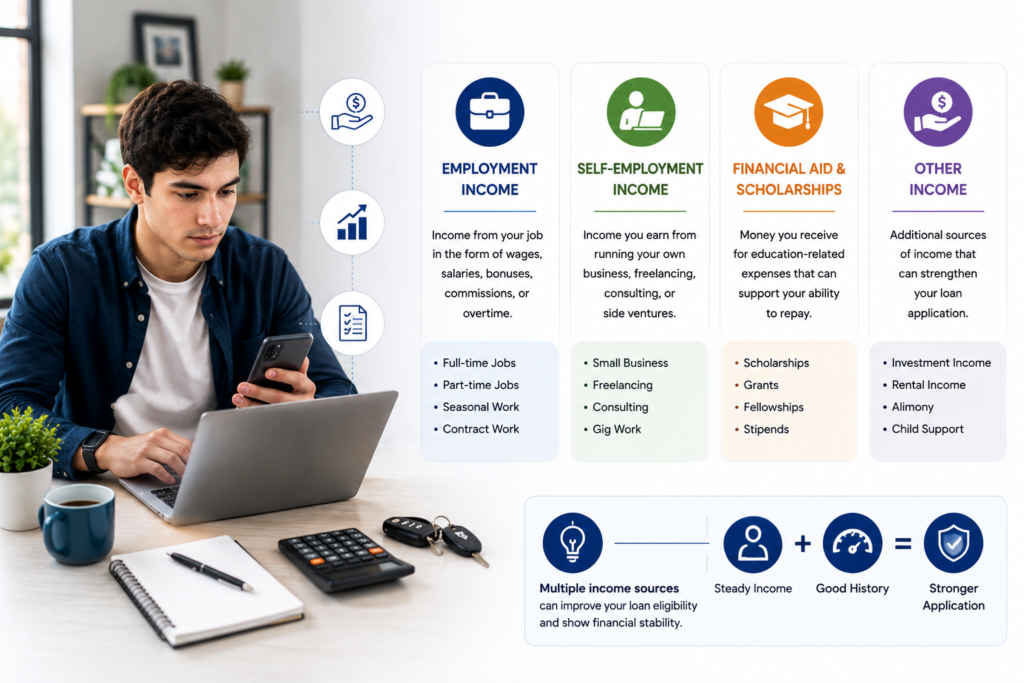
If you don’t have a traditional job, your lender may be able to consider other sources of income, depending on the loan program and documentation requirements.
Self-Employment Income
Being self-employed doesn’t mean you’re unemployed from a mortgage lender’s perspective.
If you run a business, freelance, consult, or work as an independent contractor, you may be able to qualify using documented self-employment income.
However, lenders typically want evidence that the income is stable and can reasonably be expected to continue. For example, Fannie Mae’s current underwriting guidance says lenders evaluate employment history and whether income represents a reliable pattern.
You may need tax returns, business records, bank statements, or other documentation depending on the lender and loan program.
Rental Income
If you own rental property, rental income may potentially be used to help qualify for a mortgage.
The lender will generally want documentation showing that the rental income is legitimate and sufficiently established. Exactly how much can be counted depends on the loan program and the type of rental income.
Don’t assume that every dollar deposited into your bank account will automatically count as qualifying income.
Investment Income
Dividends, interest, and certain investment-related income can sometimes be considered.
Federal mortgage regulations allow creditors to consider certain current or reasonably expected income sources, including interest and dividends, when evaluating a borrower’s ability to repay.
However, lenders typically have specific rules for documenting and calculating this income.
Retirement Income
If you’re retired and don’t have a traditional job, you may still be able to qualify for a mortgage using eligible retirement income.
Depending on the situation, this could include income from pensions, Social Security, annuities, or qualifying retirement-account distributions.
Fannie Mae’s current guidelines specifically recognize certain retirement and Social Security income as potentially acceptable qualifying income when the applicable requirements are met.
Other Eligible Income
Depending on the lender and mortgage program, other sources may potentially be considered.
Federal regulations allow creditors to consider various forms of current or reasonably expected income, including commissions, bonuses, tips, public assistance, alimony, child support, and other qualifying sources.
The important distinction is that having money coming in is not always enough. The lender may need to verify the source, history, amount, and expected continuation of the income.
What If You’re Currently Unemployed?
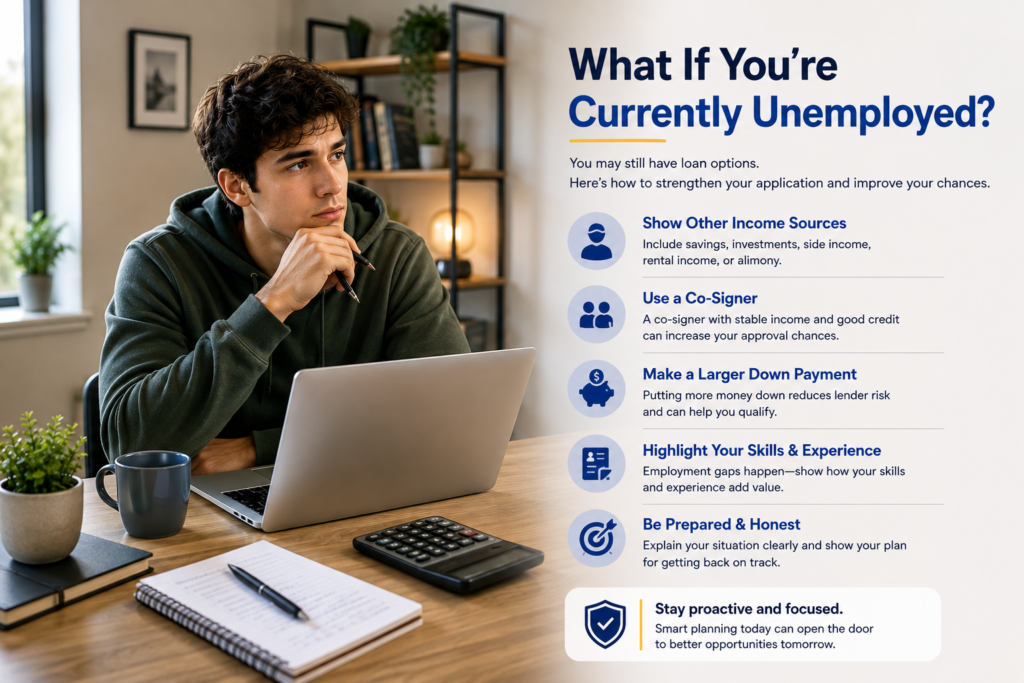
This is where things become more complicated.
If you recently lost your job but have a new job lined up, your situation may be different from someone who has no employment prospects or other qualifying income.
For example, Fannie Mae’s current guidelines allow certain borrowers with future employment offers or contracts to qualify under specific conditions. The rules can include requirements involving the property, employment start date, documentation, and type of income.
Unemployment benefits are generally not a simple substitute for a regular paycheck either. Under Fannie Mae’s current guidelines, unemployment benefits can be considered in specific circumstances, including certain seasonal-employment situations, but documentation and history requirements apply.
This is why someone who is between jobs should talk to a mortgage professional before assuming they cannot qualify.
Can Assets Help You Get a Mortgage?
Potentially, yes.
Federal mortgage rules allow lenders to consider certain assets when determining a borrower’s ability to repay. Examples can include money in checking or savings accounts, investments, retirement accounts, and certain trust assets, subject to applicable requirements.
This can be particularly relevant for retirees, investors, business owners, or people who have significant savings but don’t receive a traditional paycheck.
However, simply having a large bank balance doesn’t guarantee approval.
The lender still needs to evaluate the overall application, including debts, credit history, property-related expenses, and the amount and type of assets available.
What Documents Might You Need?
If you’re applying without traditional employment income, expect the lender to ask for more documentation than a straightforward W-2 borrower might provide.
Depending on your situation, you could be asked for:
- Bank statements
- Investment account statements
- Federal tax returns
- Proof of rental income
- Retirement income documentation
- Business records
- Self-employment documentation
- Employment offer or contract
- Proof of other eligible income
- Information about your existing debts
For example, Fannie Mae requires lenders to verify employment income used for qualifying and specifies documentation such as paystubs, W-2s, and tax returns for applicable borrowers.
The exact documentation varies by lender and loan program.
Improve Your Chances Before Applying
If you’re currently without a job, I wouldn’t start by submitting applications to every mortgage lender you can find.
First, understand your financial position.
Check your credit reports, calculate your monthly debt payments, organize your income and asset documentation, and determine how much cash you can comfortably use for a down payment and closing costs.
It’s also worth calculating the mortgage payment yourself instead of relying on the maximum amount a lender says you qualify for.
The CFPB specifically recommends focusing on what you can comfortably afford rather than simply borrowing the maximum amount available. Your real housing cost can include the mortgage payment, property taxes, homeowners insurance, and potentially mortgage insurance and other expenses.
Consider a Co-Borrower
If your own income isn’t sufficient to qualify, adding a co-borrower may be an option with some mortgage programs.
A co-borrower’s income, assets, debts, and credit profile can affect the overall application.
But this isn’t something to do casually. A co-borrower is taking on a real financial obligation, so everyone involved should understand who will make the payments and what happens if the borrower runs into financial problems.
Be Careful With “No-Income” Mortgage Claims
You may see advertisements promising a mortgage with “no income verification,” “guaranteed approval,” or similar claims.
Treat these offers carefully.
Modern mortgage underwriting generally involves evaluating the borrower’s ability to repay. The CFPB explains that lenders generally must consider and document factors such as income or assets, employment status when relevant, credit history, debts, and mortgage-related expenses.
A lender offering a nontraditional mortgage isn’t necessarily doing anything wrong, but you should understand exactly how the loan works and whether it carries a higher rate, additional fees, or other risks.
Don’t Confuse Approval With Affordability
This is one of the biggest lessons I would keep in mind when shopping for a mortgage.
A lender might approve you for a certain amount, but that doesn’t mean you should spend that much.
If your income is irregular or comes primarily from investments, rental properties, or other sources, your cash flow can be less predictable than a standard salary.
Leave room in your budget for property taxes, insurance, repairs, maintenance, utilities, and unexpected expenses.
The CFPB makes the same distinction: the amount you qualify to borrow can be different from the amount you can comfortably afford.
Getting a home loan without a traditional job is possible in some circumstances, but it usually requires stronger documentation and careful planning.
The key is to show the lender that you have a reliable way to repay the mortgage. That could come from self-employment, rental income, investments, retirement income, certain benefits, a future employment contract, or qualifying assets, depending on the loan program and lender.
Don’t focus only on finding a lender willing to approve you. Compare the interest rate, APR, closing costs, loan term, monthly payment, and total cost of the mortgage.
Most importantly, be honest about your financial situation. A mortgage is a long-term commitment, and qualifying for one is only the first step. The real goal is finding a home payment you can comfortably manage even when your income isn’t perfectly predictable.