Buying a new car is exciting, but there is one important step you should take before driving your new vehicle off the dealership lot: make sure you have the right car insurance in place.
In most parts of the United States, you need to meet your state’s minimum auto insurance requirements before you can legally drive. If you’re financing or leasing a new car, your lender may also require coverage beyond the state minimum.
The good news is that arranging insurance before buying a car is usually straightforward. You can often get a quote using the vehicle’s VIN once you have selected the car.
Here’s what you should know about insurance before buying a new car.
Do You Need Car Insurance Before Buying a New Car?
Yes, in most situations, you should have an insurance plan ready before you take possession of a new vehicle.
If you already have auto insurance, you may be able to add the new car to your existing policy. However, you should contact your insurance company before purchasing the vehicle to confirm how your coverage applies and how long you have to officially add the car.
If you don’t currently have auto insurance, you should arrange a policy before driving the new vehicle.
The exact requirements can vary depending on your state, insurance company, and whether you are financing, leasing, or paying cash for the car.
What Type of Insurance Should You Get?
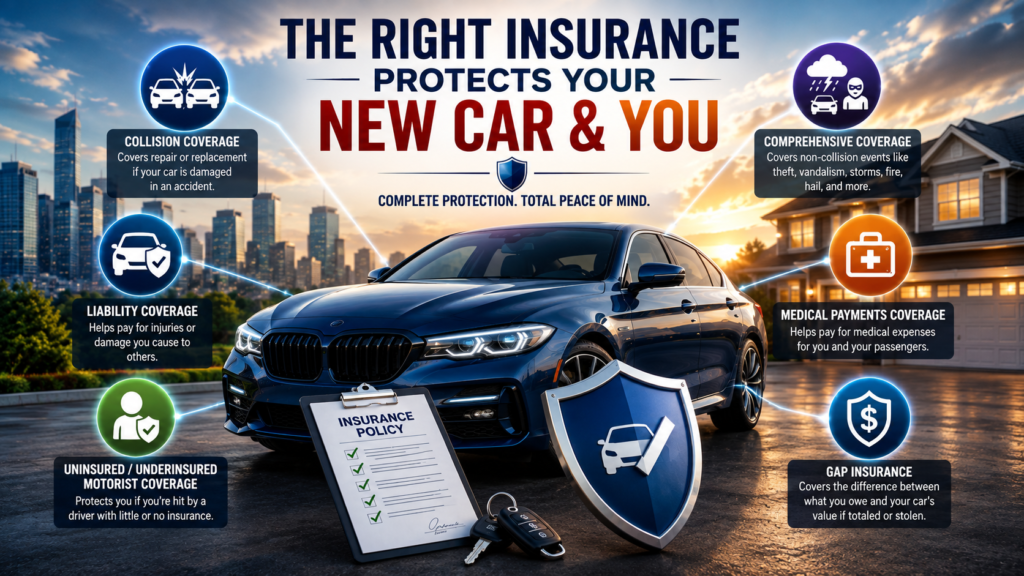
For a new car, buying only the minimum insurance required by your state may not provide enough financial protection.
A typical new-car insurance policy can include several different types of coverage.
1. Liability Insurance
Liability coverage is generally the foundation of an auto insurance policy.
It can help pay for injuries or property damage you cause to other people in an accident for which you are legally responsible.
States establish their own minimum liability requirements, but those limits may be relatively low compared with the potential cost of a serious accident.
For that reason, many drivers choose liability limits above the legal minimum.
If you have significant savings, investments, income, or other assets, higher liability limits may also provide greater protection against a large claim.
2. Collision Coverage
Collision insurance can help pay to repair or replace your vehicle after a covered collision, subject to your deductible.
For example, collision coverage may apply if you:
- Hit another vehicle
- Crash into a stationary object
- Damage your vehicle in a single-car accident
- Lose control and hit a barrier or structure
Collision coverage is particularly important for a new car because replacing or repairing a newer vehicle can be expensive.
If you finance your car, your lender will often require collision coverage.
3. Comprehensive Coverage
Comprehensive insurance protects against many types of damage that aren’t caused by a collision.
Depending on the policy, covered events can include:
- Theft
- Vandalism
- Hail
- Falling objects
- Fire
- Flooding
- Animal-related damage
- Severe weather
Like collision coverage, comprehensive insurance is commonly required by lenders when you finance or lease a vehicle.
For a new vehicle, comprehensive coverage can be especially valuable because theft, weather damage, and other non-collision losses can result in significant repair or replacement costs.
4. Uninsured and Underinsured Motorist Coverage
Not every driver on the road carries enough insurance.
Uninsured motorist coverage may help protect you if you’re injured or your vehicle is damaged by a driver who has no insurance, depending on your state’s rules and your policy.
Underinsured motorist coverage can provide protection when the other driver’s insurance isn’t enough to cover your losses.
The availability and requirements for these coverages vary by state, so check how they work where you live.
5. Medical Payments or Personal Injury Protection
Depending on your state, you may also have access to medical payments coverage or Personal Injury Protection (PIP).
These coverages can help pay certain medical expenses resulting from an auto accident.
PIP is particularly important in states that use no-fault insurance systems, where your own insurance may cover certain injury-related expenses regardless of who caused the accident.
Do You Need Full Coverage on a New Car?
“Full coverage” isn’t technically one specific insurance policy. People commonly use the term to describe a policy that combines liability insurance with comprehensive and collision coverage.
For a new car, this combination is often a sensible choice.
If you’re financing the vehicle, your lender will typically have specific insurance requirements. These requirements can include comprehensive and collision coverage, minimum liability limits, and other conditions.
Even if you purchase the car with cash, you should consider whether you could comfortably afford to repair or replace it after a major loss.
If the answer is no, carrying broader coverage may make financial sense.
Should You Get Gap Insurance?
Gap insurance can be worth considering when buying a new car, particularly if you’re financing it.
A vehicle can lose value quickly after purchase. If your car is totaled or stolen, your standard insurance settlement is generally based on the vehicle’s covered value rather than simply the amount you still owe on your loan.
This can create a gap between the insurance payout and your remaining loan balance.
For example, suppose:
- Your remaining auto loan is $35,000
- Your vehicle’s covered value is $29,000
- Your insurance deductible is $1,000
Depending on the circumstances, you could still owe money after the insurance claim is settled.
Gap insurance may help cover some of that difference, subject to the policy’s terms and exclusions.
It’s worth comparing the cost and terms of gap coverage before purchasing it through a dealer or another provider.
What Insurance Information Do You Need to Buy a New Car?
When getting an insurance quote, you may need information such as:
- Vehicle make and model
- Model year
- Vehicle Identification Number (VIN)
- Purchase price
- Your driver’s license information
- Address where the vehicle will be kept
- Expected annual mileage
- Financing or leasing information
- Current insurance information, if applicable
If you haven’t received the VIN yet, an insurer may still be able to provide an estimated quote using the vehicle’s year, make, model, and trim.
Once you have the VIN, the insurer can generally provide a more accurate quote.
Should You Add the New Car to Your Existing Policy?
If you already own a vehicle and have an active auto insurance policy, adding the new car to your existing policy may be the simplest option.
However, don’t assume your existing coverage automatically provides everything you need.
Before purchasing the vehicle, ask your insurer:
- Whether your current policy can cover the new vehicle
- How long you have to add the vehicle
- What coverage limits apply
- What deductible options are available
- Whether your premium will change
- Whether your lender’s requirements are satisfied
Getting these answers before signing the final paperwork can prevent unpleasant surprises.
How Much Insurance Should You Buy?
There isn’t one coverage level that is right for every driver.
Your decision should take into account your state’s legal requirements, the value of your vehicle, your finances, your driving habits, and whether you’re financing the car.
A useful approach is to start with the coverage required by your state and lender, then consider whether higher liability limits and additional protections make sense for your financial situation.
Don’t choose a policy based solely on the lowest monthly premium.
A cheaper policy may have lower limits, higher deductibles, or fewer protections.
Instead, compare the overall value of the coverage.
When Should You Buy Insurance for a New Car?
Ideally, arrange your insurance before you arrive at the dealership to complete the purchase.
Once you’ve selected the vehicle, contact your insurer and provide the vehicle information.
If you’re financing, make sure the insurer knows the lender’s information and coverage requirements.
Having everything prepared can make the purchase process much smoother and reduce the risk of leaving the dealership without the required insurance.
Before buying a new car, don’t treat insurance as an afterthought.
At a minimum, you need to understand your state’s insurance requirements. If you’re financing or leasing, you’ll also need to meet your lender’s requirements.
For many new-car buyers, a policy that includes liability, collision, comprehensive, and uninsured/underinsured motorist coverage can provide broader protection than carrying only the minimum required insurance. Depending on your financing situation, gap insurance may also be worth considering.
The best policy depends on your vehicle, budget, state, financial situation, and risk tolerance.
The smartest approach is to get insurance quotes before finalizing your purchase, compare coverage limits and deductibles—not just prices—and confirm that the policy satisfies both your state’s requirements and your lender’s conditions.
That way, when you drive your new car home, you can enjoy the purchase knowing you’ve taken an important step toward protecting it.
Agar chaho, main isi article ke liye SEO title, meta description, URL slug, FAQ section aur featured-image prompt bhi bana sakta hoon.